1
Prototype
Validate geometry and material with the cheapest method that proves your design — compare prototyping methods.
Seven processes under one roof — but the right one is set by your part, not by our machines. Use this hub to walk the full decision path: prototype, mold, order size and production process, with a selection matrix and cost guidance at every step.
These four pages walk a buyer from first prototype to volume production. Start where you are — each page links forward and back, so you never lose the thread.
Pick a prototyping method — SLA/DLP, vacuum casting, aluminum soft tooling or steel mold — to validate geometry and material first.
Compare compression vs LSR mold investment and life, and read the cost drivers before you commit to tooling.
Decide first-order quantity and reorder brackets — and see why unit price alone is a trap.
Judge whether LSR injection or compression molding is the right production route for your part.
Five forming processes shape your part; two upstream processes feed and enable them. The same engineering team owns quality at every step — no subcontracting of production.
Each route is selected by geometry, material, detail, volume and cost — not by which machine we happen to own. Explore a dedicated process page for equipment, accuracy and lead times.
Solid silicone parts — seals, gaskets, kitchenware, covers and industrial components — for small to medium volumes.
30 presses · 20–500 ton · ±0.008 mm mold · Shore 20A–80A
Fine details, complex geometry and higher-volume, higher-purity parts — including medical components.
6 machines · Cpk 1.24 · ISO Class 7 cleanroom
Tubing, cord, profiles and continuous gaskets — fuel lines, window/door seals, cleanroom and food-grade.
15 lines · die & mandrel ±0.008 mm / ±0.003 mm
Flat 2D parts from silicone sheet — gaskets, pads, seals and medical interfaces.
Rotary & steel-rule · tight sheet-thickness control
Silicone combined with engineered thermoplastics (PC, ABS, PP, PA66, PBT, POM) or metal inserts.
2-in-1 & insert molding · 15–30 day tooling
These two capabilities feed every forming route. Keeping them in-house means compound formulation and tooling accuracy are never outsourced.
Compounding raw silicone base gum with curing agent, pigment and additives into a uniform sheet on a two-roll mill.
5 internal (Banbury-type) mixers · ΔE ≤ 1.5 color matching · FDA / LFGB / USP Class VI / FVMQ
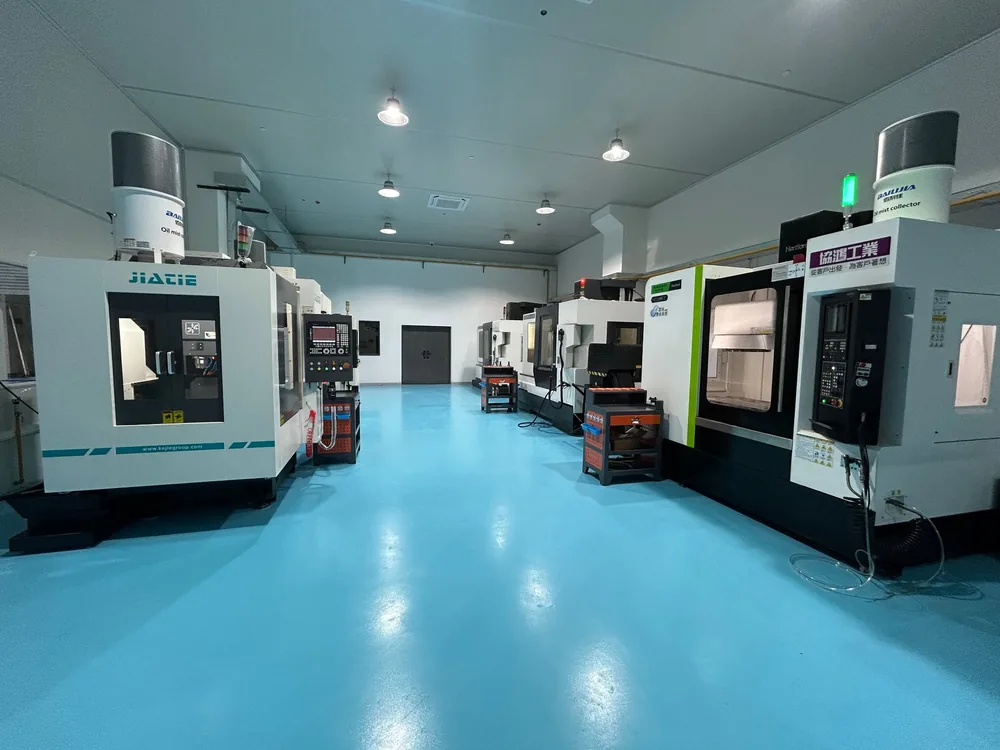
In-house CNC machining and mirror/slow-wire EDM of steel cavities — P20, NAK80, S136 — for every molding route.
19 CNC · ±0.008 mm · 64-cavity · 100,000+ cumulative molds
Use this as an initial guide. Final process selection follows a project-specific engineering review.
| Process | Often considered for | Key project factors |
|---|---|---|
| Compression molding | Solid silicone parts, seals, kitchenware, covers and medium-volume programs | Part size, cavity layout, flash control, material and quantity |
| LSR injection molding | Fine details, complex geometry, high volume and medical-grade components | Material system, tool investment, gating, automation and validation |
| Silicone extrusion | Tubing, cord, profiles and continuous gaskets | Cross-section, cut-to-length, material grade and continuous-length tolerance |
| Die cutting | 2D gaskets, pads and interfaces from silicone sheet | Sheet thickness, shape complexity, tolerance and waste control |
| Overmolding & bonding | Silicone combined with thermoplastics or metal components | Substrate, bonding, insert positioning, temperature and interface design |
| Mill mixing (compounding) | Color matching, material formulation and cure/pigment dosing | Material grade, hardness, color and batch consistency |
| Mold making (tooling) | Steel tooling for every molding route | Steel grade (P20 / NAK80 / S136), cavity count, tolerance and maintenance |
| Your part | Choose | Why |
|---|---|---|
| Solid silicone — seals, gaskets, kitchenware, covers | Compression molding | Lower tooling cost ($800–$10,000) and flexible hardness (Shore 20A–80A) for small-to-medium volumes. |
| Thin walls, fine detail, tight tolerance, high purity or high volume | LSR injection molding | Automated, flash-free, ±0.1 mm class, cleanroom-grade — the only route for thin-walled medical parts. |
| Continuous shapes — tubing, cord, profiles | Silicone extrusion | Continuous lengths with tight cross-section tolerance, cut to length as required. |
| Flat 2D parts from sheet — gaskets, pads, interfaces | Die cutting | Fast, low-cost 2D gaskets and pads from silicone sheet. |
| Silicone bonded to plastic or metal | Overmolding & bonding | 2-in-1 and insert molding combine silicone with PC, ABS, PP, PA66, PBT, POM or metal. |
| Not sure yet — need a sample to decide | Prototype first | Validate geometry and material with a low-cost method, then commit to the production process. |
Not sure which route fits? Send your part and reference — we will review geometry, material, volume and compliance before quotation. See the full equipment list on our factory capability page.
Most silicone parts fall into one of these two routes. The choice is driven by geometry, material, tolerance, volume and budget — not by volume alone.
| Compression molding | LSR injection molding | |
|---|---|---|
| Material | Solid silicone (mill-mixed) | Liquid silicone, platinum-cured, metered 1:1 |
| Finished-part tolerance | ±0.2 – 0.3 mm | ±0.1 – 0.2 mm |
| Cycle time | 60 – 180 sec | 15 – 40 sec |
| Mold cost (indicative, USD) | $800–$10,000 | $10,000–$50,000+ |
| Mold life (typical) | 100,000–300,000 shots | 500,000–1,000,000+ shots |
| Best for | Thicker solid parts, low-to-mid volume | Thin walls, detail, high volume, high purity |
Read these figures honestly. Mold price and life are engineering ranges tied to part size, cavity count, steel grade and maintenance — see mold cost breakdown for full assumptions. For the detailed head-to-head, read LSR vs compression molding.
Every CYES project moves through the same four stages. Each stage has its own decision — and its own dedicated page.
Validate geometry and material with the cheapest method that proves your design — compare prototyping methods.
Commit to a production mold only after the design is locked — understand mold cost and life first.
Set a first-order quantity that balances tooling amortization against write-down risk — plan your MOQ.
Pick the production process — compression or LSR — that fits your final volume and tolerance — choose the process.
These capabilities sit behind every forming route, so process choice is never limited by what we can engineer.
Design-for-manufacturing feedback on geometry, draft, wall thickness and tolerance before tooling.
Food-grade, medical-grade and industrial silicone — plus hardness from Shore 20A to 80A.
Shore A matching and ±0.008 mm cavity accuracy with per-project critical-dimension validation.
Metal inserts and plastic/silicone combinations molded in 2-in-1 and insert-molding cells.
IQC/IPQC/OQC inspection, Cpk process capability and PPAP/FAI documentation.
Mill mixing with ΔE ≤ 1.5 color matching and controlled batch consistency.
The process you choose sets the mold price, and the order size sets how much of that mold cost lands on each part. Judge the pair together, not separately.
Send your CAD, drawing or product reference. We will review geometry, material, volume and compliance before quotation.
Request a QuoteRead the OEM/ODM Guide