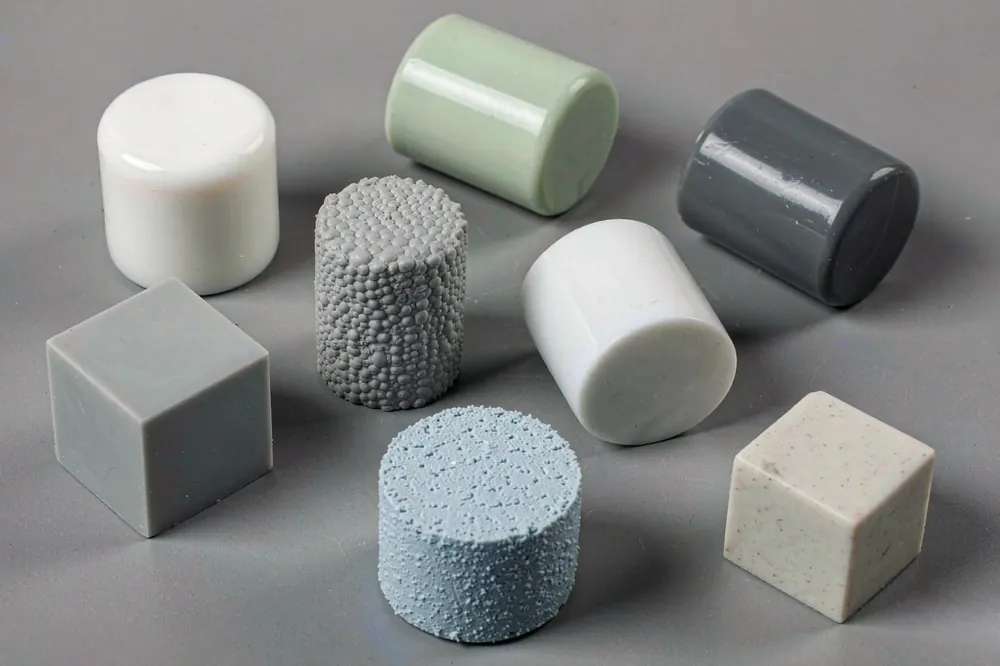
Choosing the right silicone material is the single most important decision in a custom silicone project. The right choice balances performance, certification and cost — while the wrong one can delay your launch or fail your market's compliance requirements.
Start With the Application
Ask three questions first: Will the part contact food or skin? What temperature range will it face? What hardness and flexibility does it need? These answers narrow the field quickly.
- Food or medical contact → food-grade or medical-grade silicone with FDA / LFGB testing and compliance.
- High temperature or oil exposure → heat-resistant solid silicone rubber (e.g. automotive parts).
- High precision and purity → liquid silicone rubber (LSR) injection molding.
Solid Silicone Rubber vs. Liquid Silicone (LSR)
Solid silicone rubber (also called HCR — high-consistency rubber) is compression molded and is the most cost-effective choice for larger, simpler parts and lower volumes. Liquid silicone rubber is injected and offers tighter tolerances, higher purity and faster cycles — ideal for medical, baby and high-volume precision parts.
Rule of thumb: if you need high-volume precision parts, consider LSR. If your design is simple or volumes are low, solid silicone is often more economical.
Specialty Grades for Demanding Environments
- Fluorosilicone (FVMQ): resists fuel, oil and solvent exposure — the choice for automotive, aerospace and chemical-sealing applications where standard silicone would swell or degrade.
- Engineering plastics (PC, PA66, PBT): used as substrates for multi-material overmolding, bonding silicone onto rigid structural components in a single part.
Key Material Properties
- Hardness (Shore A): typically 20–80A — softer for baby and beauty products, harder for seals and industrial parts.
- Tear and tensile strength: critical for parts that are stretched or pulled.
- Color: custom Pantone matching is available for brand consistency.
- Additives: food-contact pigments, UV stabilizers and heat stabilizers as required.
Shore Hardness Selection Guide
Hardness is the single most useful shortcut for specifying a silicone part. Below is a practical guide that maps each Shore A grade to its typical feel and the applications where it performs best.
| Shore A | Feel | Typical Applications |
|---|---|---|
| 20A | Extra soft, gel-like | Soft baby teethers, ultra-soft cushions, cosmetic applicators, shock-absorbing pads |
| 30A | Very soft, pliable | Pacifiers, baby feeding spouts, soft-touch grips, medical cushions |
| 40A | Soft, resilient | Baby bottle nipples, beauty tools, wearable straps, flexible gaskets |
| 50A | Medium, balanced | Kitchenware, sealing rings, keypads, general-purpose molded parts |
| 60A | Medium-firm | Automotive seals, O-rings, grommets, suction cups, protective covers |
| 70A | Firm | High-load gaskets, industrial sealing, damping pads, heavy-duty caps |
| 80A | Hard | Structural seals, mounting feet, high-wear industrial components |
Hardness is a starting point, not a specification — final grade depends on the part's geometry, load, temperature and compliance requirements. We confirm the exact compound and durometer in DFM before tooling.
Raw Material Sources
Consistent silicone starts with consistent raw material. We compound from globally established silicone suppliers — including WACKER, Dow Corning, Shin-Etsu (信越), Momentive (迈图) and Elkem (蓝星) — so every batch is traceable to a certified source and matches the specified grade.
Certification Requirements
If your product enters the EU, US or food/medical markets, confirm the grade you specify carries the right documentation — LFGB (EU food contact), FDA (US food/medical contact) and ROHS/REACH for restricted substances. Reputable manufacturers supply test reports with every batch.
Still unsure which material fits? Send us your requirements and our engineers will recommend the best option — free of charge.