1
Requirements & DFM
We review the part, material, hardness, compliance needs, quantity and open technical questions.
30 compression presses (20–500 ton), in-house CNC/EDM tooling to ±0.008 mm and solid silicone parts from seals and kitchenware to industrial components. Here is how to judge whether compression molding — not LSR — is the right production route for your part.
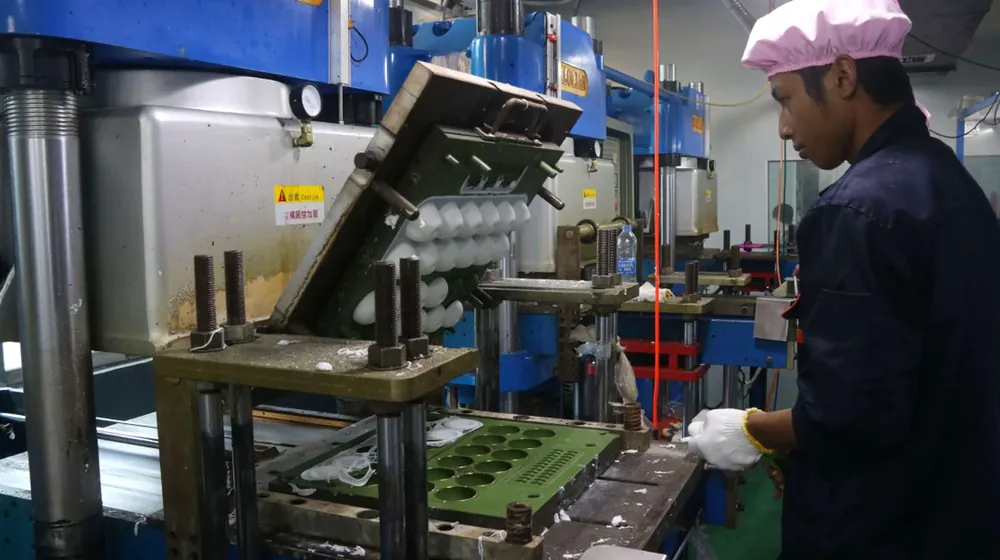
Compression molding shapes solid silicone rubber by placing a pre-form (or milled compound) into a heated steel mold and closing it under pressure to cure the part. It is the standard route for solid silicone components — gaskets, seals, O-rings, kitchenware, covers and protective parts — especially for small to medium volumes.
CYES SILICONE runs compression molding as a core process alongside LSR injection, so the process we recommend is driven by your part, not by which machine we happen to own.
Verified equipment and process numbers — the same figures published across our factory-capability and engineering pages.
20–500 ton press range with in-house rubber mixing (5 internal mixers), covering single-cavity samples through multi-cavity production.
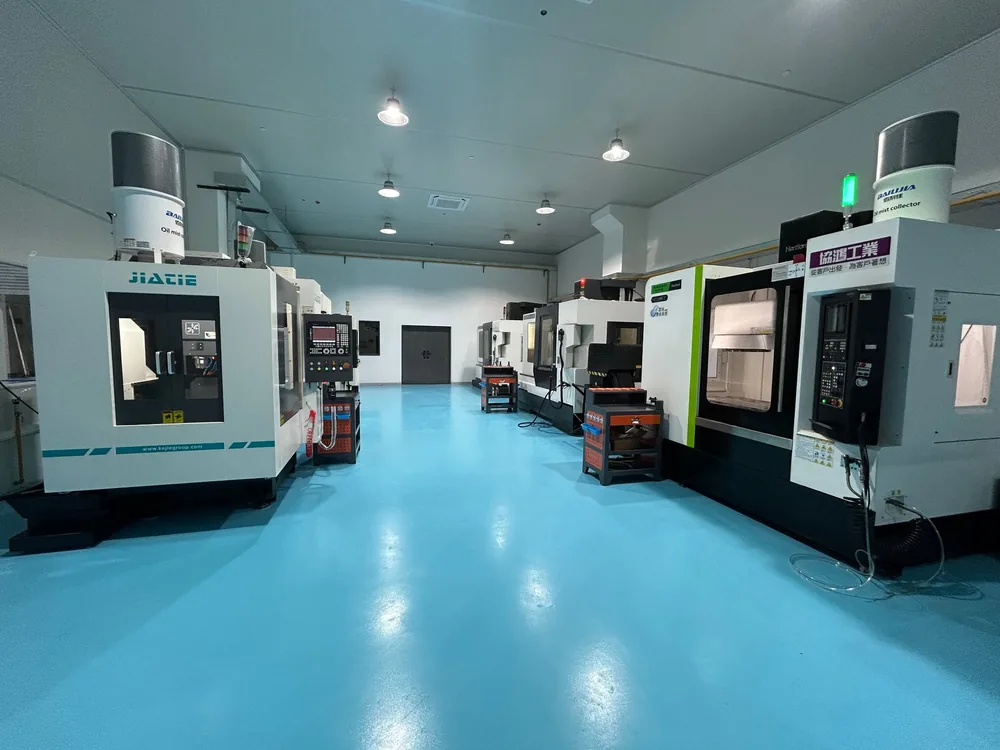
CNC and mirror/slow-wire EDM machine cavities in P20 / NAK80 / S136 steel (hardened H13 for high volume) — the same tooling accuracy as our LSR molds.
Flexible hardness and material options across food-grade and industrial solid silicone, with FDA / LFGB / RoHS / REACH material compliance.
See the full machine list and process detail on our factory capability page.
Compression molding cures solid silicone in a heated mold under pressure — lower tooling cost and well suited to medium volumes. LSR injection molds liquid silicone with automated dosing for faster cycles and finer detail. Both run in-house, so the recommendation follows your part, not our machines.
| Compression molding | LSR injection molding | |
|---|---|---|
| Finished-part tolerance | ±0.2 – 0.3 mm | ±0.1 – 0.2 mm (critical dimensions validated per project) |
| Cycle time | 60 – 180 sec | 15 – 40 sec |
| Wall thickness & geometry | Suits thicker, larger, solid parts | Best for thin walls (under ~1.5 mm), complex and detailed shapes |
| Material delivery | Pre-mixed solid silicone compound (mill-mixed) | Two-part liquid silicone, platinum-cured, metered 1:1 |
| Flash control | Flash common; manual trimming often needed | Closed mold with cold-runner shut-off; most tools run flash-free |
| Inserts & overmolding | Limited; manual placement | Excellent for insert-molding and multi-material overmolding |
| Automation | Semi-automatic; more labor per part | Fully automated dosing, molding and de-molding |
| Volume economics | Strong at roughly 1K – 10K pcs | Strong at roughly 10K+ pcs — but volume alone is not the deciding factor |
| Typical use | Gaskets, kitchenware, baby toys | Valves, medical seals, keypads, nipples |
Do not choose on volume alone. Material, geometry, tolerance, automation need, flash control, inserts and post-processing all shift the decision. A thicker solid part with modest tolerance rarely needs LSR; a thin-walled medical valve almost always does. See the full head-to-head on our LSR vs compression molding page and the process overview on silicone manufacturing processes.
| Your situation | Choose | Why |
|---|---|---|
| Larger, thicker, solid parts at low-to-mid volume | Compression molding | Cheaper tooling ($800–$10,000) and slower cycles are fine when precision and volume are modest. |
| Thin walls, fine detail, tight tolerance or high purity | LSR injection molding | Automated, flash-free and repeatable — the only way to hold ±0.1 mm class and cleanroom-grade purity. |
| Insert-molding or multi-material overmolding | LSR injection molding | Vertical cells and 1:1 metering are built for plastic/silicone and metal/silicone combinations. |
| Not sure yet — need a sample to decide | Prototype first | Validate geometry and material with our prototyping methods, then commit to the production process. |
Compression molding starts from solid silicone compound, mill-mixed in-house. If your part wants solid silicone’s properties, the material itself points to compression.
| Property | Solid silicone (compression) | Liquid silicone (LSR) |
|---|---|---|
| Cure system | Peroxide or platinum, mill-mixed | Platinum-catalyzed addition cure |
| Extractables / purity | Higher; depends on filler and catalyst | Very low; preferred for medical and food contact |
| Batch consistency | Mill-mixing can vary batch to batch | Metered 1:1 mixing gives tight lot-to-lot consistency |
| Optical clarity | Usually translucent or opaque | Available in high-clarity grades |
| Filler / property tuning | Easy to add fillers for stiffness and cost | More limited filler loading |
| Typical hardness | Wide, ~10 – 80 Shore A | ~20 – 70 Shore A typical |
If you need a stiff, filled, cost-sensitive solid part — or a hardness outside the LSR window — that is a material-driven case for compression molding. See the mill mixing page for the solid-silicone side and the material guide for full options.
These geometry and volume characteristics are the strongest signals that compression molding — not LSR — is the right process.
None of these is a hard rule — they are the features our engineers use to recommend compression during DFM review. A thin-walled medical valve rarely needs compression; a thick silicone mat almost always does.
Custom gaskets, seals, O-rings and grommets in Shore 20A–80A for fluid, air and dust sealing — food-grade and industrial grades.
Ice cube trays, bakeware, lids and utensils molded in platinum-cured FDA 21 CFR 177.2600 / LFGB food-grade silicone.
Teethers, feeding essentials and suction bowls in BPA-free food-grade silicone with extractables testing.
Bellows, feet, bumpers, caps and covers with material options matched to temperature and wear requirements.
We review the part, material, hardness, compliance needs, quantity and open technical questions.
In-house CNC/EDM tooling and first-shot samples establish the approved dimensions, appearance and workmanship.
Compression molding followed by trimming, post-curing, printing, assembly or packaging as required.
IQC/IPQC/OQC inspection, packaging and shipping confirmed before dispatch.
Compression molding’s lower mold cost comes with a slower cycle and higher per-part cost at scale. Judge the pair together, not the mold price alone.
| Factor | Compression mold | LSR mold |
|---|---|---|
| Mold cost (indicative, USD) | $800–$3,000 single-cavity / $3,000–$10,000 multi-cavity | $10,000–$50,000+ |
| Mold life (typical) | 100,000–300,000 shots | 500,000–1,000,000+ shots |
| Cycle time | 60–180 sec | 15–40 sec |
| Per-part cost at volume | Higher at scale | Lower at scale (faster cycle, less scrap) |
Read these figures honestly. Mold price and life are engineering ranges tied to part size, cavity count, steel grade and maintenance — not universal quotes or guarantees. Full assumptions are on the mold cost breakdown page. And the order size you commit to changes which mold makes sense — see the real cost of silicone MOQ before you fix a volume.
Send a drawing, sample or reference image and we will review the part and identify the next questions before quotation.
Send these with your RFQ and we can tell you up front whether compression or LSR molding is the better fit — and quote it accurately.
This is the same checklist our engineers use to shortlist the process during DFM. The more you send, the faster we can give you a real comparison instead of a generic quote.
Send your CAD, drawing or reference. We will review the part, material and tooling route before quotation.
Request a Quote Industrial RFQ →Compare Molding Options