An engine mount has one job: hold the engine in place while absorbing the vibration it makes. The silicone in that mount is what does the absorbing — and getting the hardness, bond and compound right is the difference between a quiet cabin and a rattling one. This guide covers how it is specified.
What a silicone engine mount does
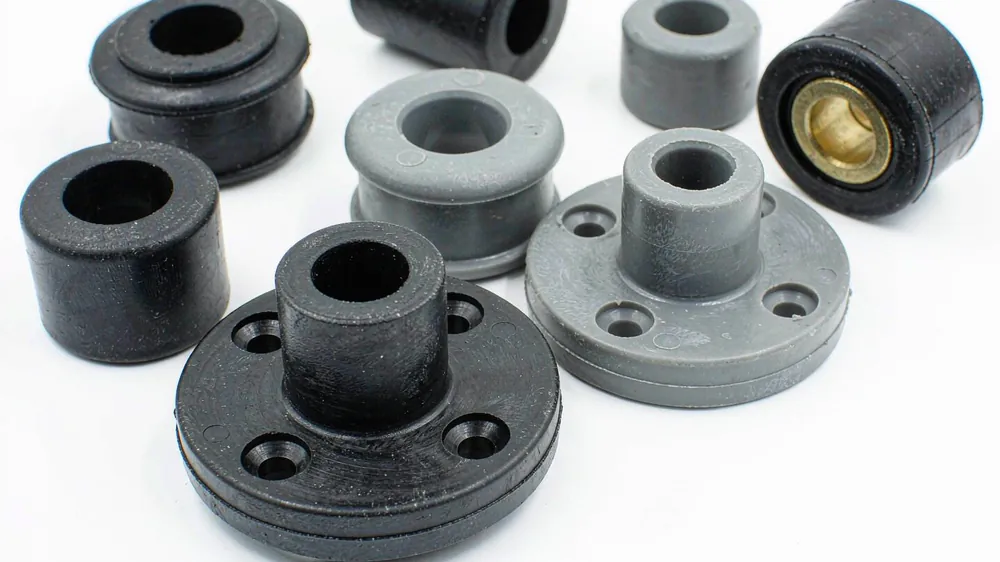
The mount is a silicone isolator bonded to metal brackets. It positions the powertrain, limits its movement under load, and damps vibration so it does not reach the chassis. Silicone is chosen over natural rubber because it keeps its damping and resilience across a much wider temperature range and ages far better under engine heat.
Shore A selection for damping
| Durometer | Behavior | Typical use |
|---|---|---|
| 40–50A | Softer, isolates more vibration | Light mounts, idler isolators |
| 50–60A | Balanced damping and support | General engine mounts |
| 60–70A | Firmer, controls movement | Heavy or torque-loaded mounts |
Silicone-to-metal bonding
The silicone is bonded to the steel or aluminum bracket with an adhesive primer applied to the metal surface before molding. Compression or transfer molding then bonds the silicone to the metal during cure. Bond strength is verified by destructive pull testing on first-article parts — a weak bond is a safety failure, not a cosmetic one.
Temperature and oil limits
Standard VMQ silicone handles engine heat to about 200 °C, but it swells in oil and fuel. If the mount sits near oil or fuel, FVMQ (fluorosilicone) is specified for heat plus oil resistance.
How to spec a mount
State the load and deflection requirements, the durometer, the temperature and fluid environment, and the bracket material and geometry. From those inputs the compound and bond system are chosen, and the mount is validated on a first-article basis.
FAQ
What hardness is a silicone engine mount? Typically Shore A 40–70. Softer (40–50A) isolates more vibration; harder (60–70A) controls movement and supports more load.
How does silicone bond to the metal bracket? Through an adhesive primer applied to the metal before molding, then compression or transfer molding bonds the silicone to it during cure. Bond strength is verified by pull tests.
Can a silicone mount handle engine heat and oil? Standard VMQ handles heat to ~200 °C but not oil. For mounts near oil or fuel, FVMQ (fluorosilicone) is used for heat plus oil resistance.
Why silicone instead of natural rubber for a mount? Silicone keeps its damping and resilience across a wider temperature range (−50 to +200 °C) and ages far better than natural rubber under engine heat.