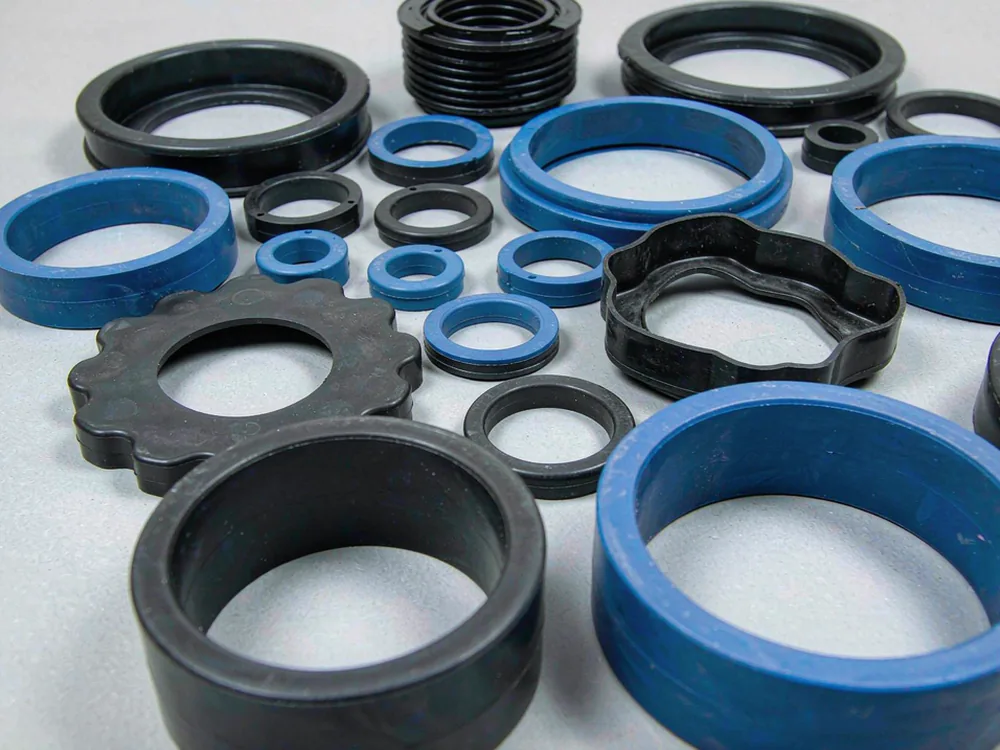
VMQ and FVMQ are both silicone rubbers, but they behave very differently around fuel, oil and solvents. Understanding that difference is what separates a seal that lasts from one that fails in service.
What Is VMQ (Standard Silicone)?
VMQ is the industry designation for standard methyl-vinyl silicone rubber — the most common silicone elastomer. It offers excellent heat and cold resistance, good flexibility and outstanding electrical properties. It is the default choice for most general-purpose sealing, gasketing and food-contact applications.
- Typical service temperature from about -50 °C to +200 °C (some grades to 230 °C).
- Good resistance to water, ozone and UV, but poor resistance to fuels, oils and solvents.
- Cost-effective and widely available.
What Is FVMQ (Fluorosilicone)?
FVMQ (fluorosilicone, often branded FVMQ) adds fluorinated groups to the silicone backbone. This single change gives it dramatically better resistance to fuels, oils and solvents while keeping most of silicone's temperature range and flexibility.
- Typical service temperature around -60 °C to +175 °C (a slightly narrower high-end than VMQ).
- Excellent fuel, oil and solvent resistance — the key reason it is specified.
- Higher cost than VMQ, driven by fluorinated raw material.
Key Differences at a Glance
| Property | VMQ (Silicone) | FVMQ (Fluorosilicone) |
|---|---|---|
| Fuel / oil resistance | Poor | Excellent |
| High-temperature limit | ~200 °C | ~175 °C |
| Low-temperature limit | ~-50 °C | ~-60 °C |
| Relative cost | Lower | Higher |
| Typical use | General sealing, food contact | Automotive & aerospace seals in fuel/oil |
When Should You Specify FVMQ?
Choose FVMQ when the part will contact fuel, oil, hydraulic fluid or aggressive solvents — for example turbocharger seals, fuel-system diaphragms, and automotive or aerospace sealing components. Choose VMQ when the part only needs heat resistance, flexibility and general sealing without chemical exposure, because VMQ is significantly more cost-effective.
The common mistake is specifying fluorosilicone everywhere "just to be safe." That adds cost without adding value — FVMQ earns its price only where chemical resistance is actually required.
For a deeper look at silicone material selection, see our silicone material guide. Need a recommendation for your seal? Contact us for a free consultation.