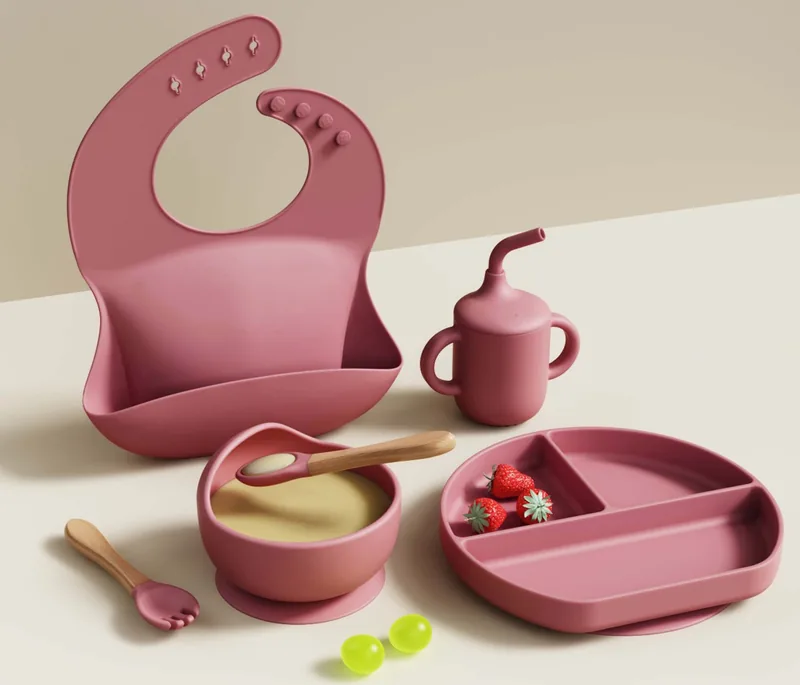
A silicone baby suction bowl is a small part with a demanding job: it has to grip a highchair tray, survive drops and dishwashing, and stay safe in a teething baby’s hands. This guide explains how the suction works, which certifications matter, and what to check before you source.
How the Suction Base Actually Works
The bowl’s grip comes from a thin, flexible silicone flange that flattens against the tray and holds a partial vacuum. Suction strength is set by three things: flange geometry (a wider, thinner lip seals better), compound hardness (softer Shore A compounds flex to follow the surface), and surface finish (a polished contact face seals more completely than a matte one).
At CYES we mold the suction flange and the bowl as one shot where possible, so there is no seam for food to trap or a baby to pick at. For two-material designs — a firmer bowl with a softer suction skirt — we overmold the skirt onto the bowl in a second shot for a permanent chemical bond.
Certifications That Actually Matter
- FDA 21 CFR 177.2600 — the US standard for rubber articles in repeated food contact.
- LFGB / EU 1935/2004 — required for the European market; stricter on extractables than FDA.
- EN 14350 — the EU standard specific to drinking and feeding equipment for children.
- BPA-free, phthalate-free, PVC-free — standard for any baby product, but ask for the lab report, not just the claim.
A food-grade compound is only the starting point. The finished bowl must still be tested for extractables and migration in its final geometry and colour, so request the report that covers the finished part.
What to Specify Before You Quote
| Spec | Typical range | Why it matters |
|---|---|---|
| Shore hardness | 40A – 60A | Softer = stronger suction, harder = more durable |
| Bowl diameter | 100 – 160 mm | Must suit highchair tray and small hands |
| Food-grade compound | FDA + LFGB | Your market decides which standard is mandatory |
| Colour | Pantone-matched | Pastels are standard; bright solids hide staining |
| MOQ | from 500 pcs | Lower than you’d expect for a molded part |
Design Details That Reduce Returns
The most common return reasons we see are weak suction and staining. Specify a peel-off tab on the flange so parents can release the vacuum cleanly, and a smooth, polished interior so tomato sauce and carrot purée do not stain. Avoid undercuts on the rim that hold water after washing.
Ask your supplier for a food-grade lab report on the finished part and a pre-production sample of the exact colour — those two documents catch most of the problems a photo won’t show.
For a full capability walkthrough, see our silicone baby products manufacturing page, or send your brief for a DFM review.
More baby tableware in Our Catalog
Beyond the products above, we mold these baby tableware types for brands — add any to your quote or request a sample.
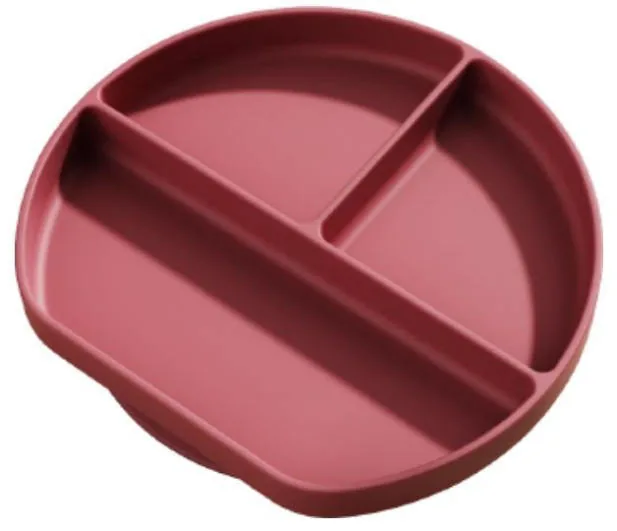
Silicone Suction Baby Plate
Plates with a suction base that stays put on high chairs.
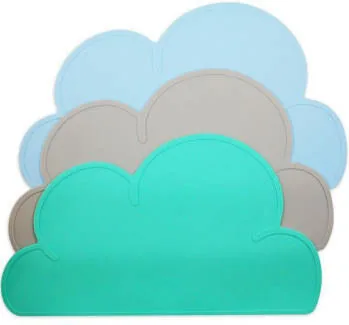
Silicone Baby Placemats with Suction
Full-surface placemats that protect the table and grip it.
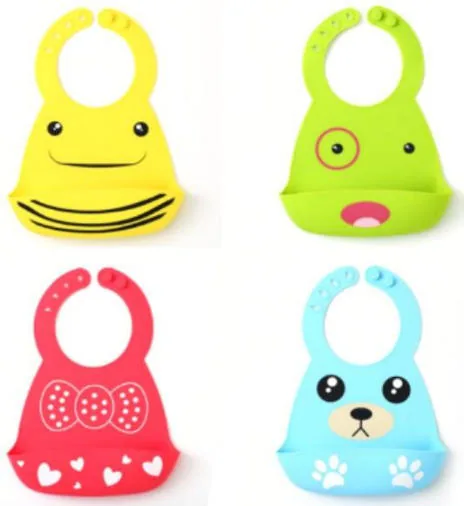
Silicone Baby Bib
Soft, catch-all bibs with an adjustable neck closure.
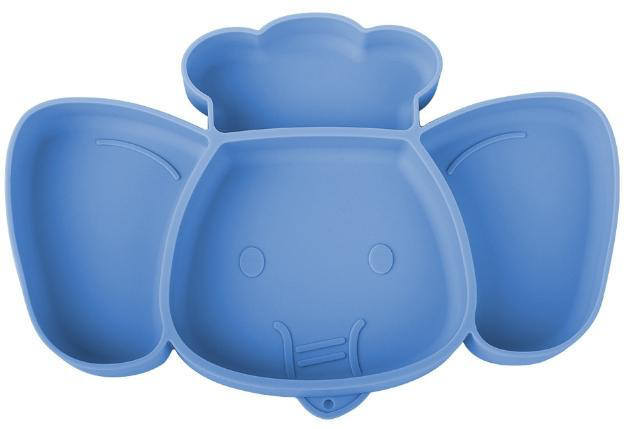
Elephant-Shape Divided Suction Plate
A playful elephant-face plate with three food zones and a suction base.
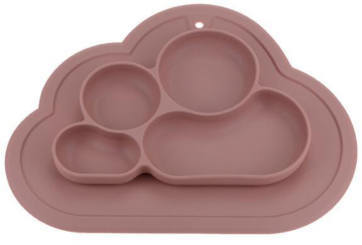
Cloud-Shape Divided Suction Plate
A four-section cloud plate with a suction base for spill-free self-feeding.
Browse the full range on our baby feeding tableware page, or request a quote.
About the author
WANG MENG · LSR Process Engineer, CYES SILICONE. Fourteen years in liquid silicone rubber (LSR) injection molding and process validation — from mold-flow and gate design to cleanroom multi-cavity runs and IQ/OQ/PQ documentation. Notes written from the shop floor, not from a content calendar.