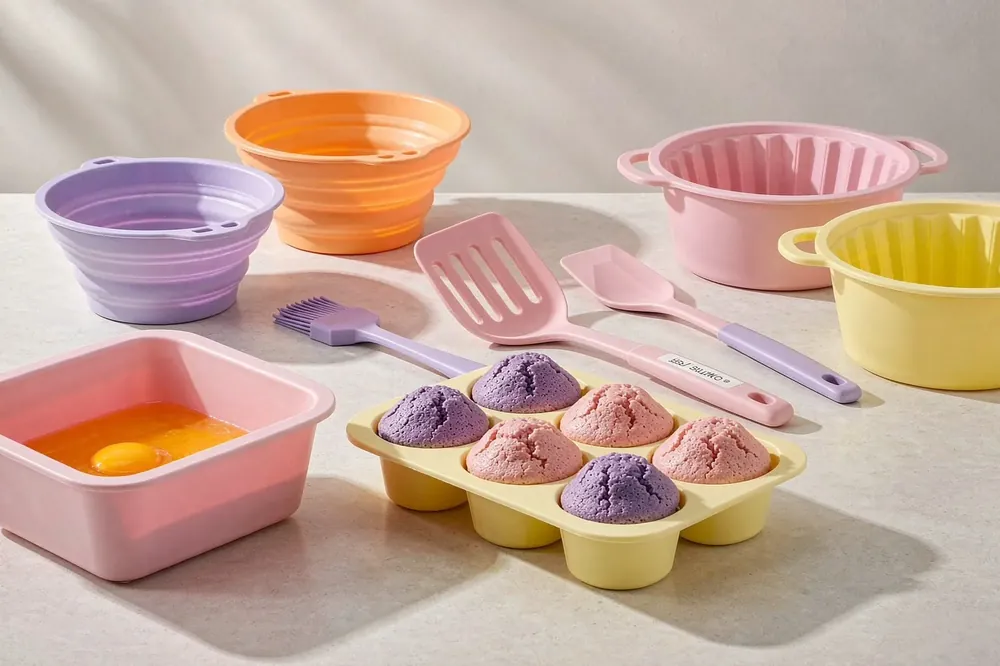
Kitchen & Baking
Baking molds, mats, spatulas, utensils, lids and collapsible containers.
View kitchen applicationsCustom kitchenware, baby feeding products, food-storage items and seals with material, use conditions and market-specific testing discussed before production.
“Food-grade” should not be treated as a universal label for every product. A baking mold, a baby spoon and a container seal can have different contact conditions and testing needs.
Tell us how the product will be used, which foods it may contact, expected temperatures and where it will be sold. This helps define material documentation and finished-product testing requirements.
These are application examples, not fixed stock items. Each product can be reviewed for custom design and branding.
Baking molds, mats, spatulas, utensils, lids and collapsible containers.
View kitchen applications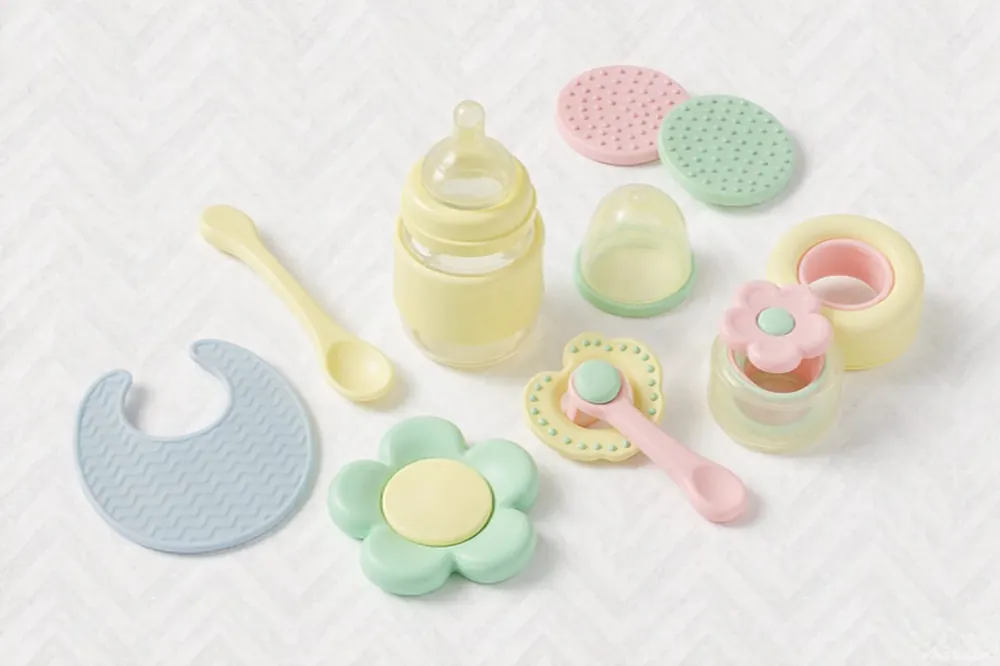
Spoons, bibs, snack cups, feeding sets and other child-care products.
View baby applications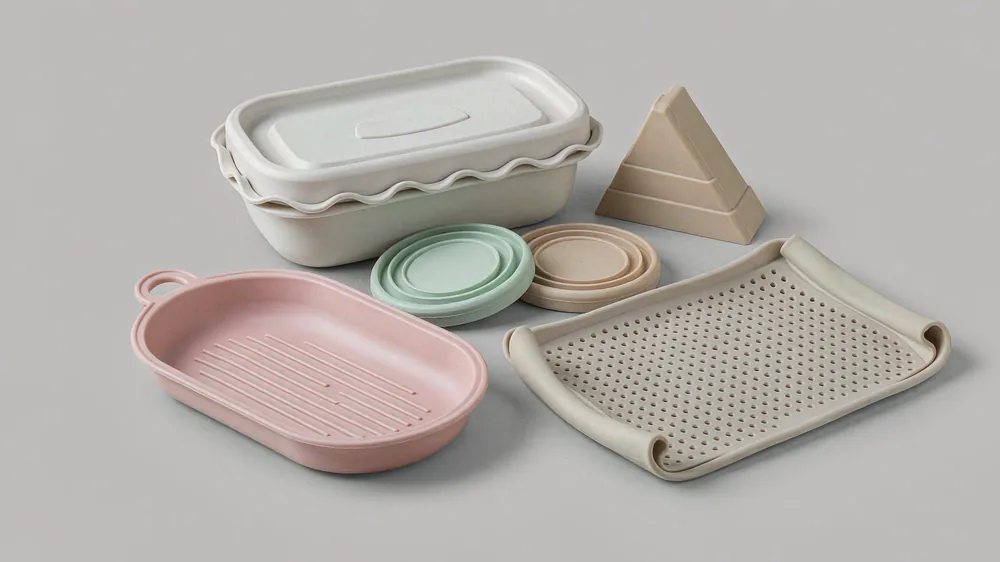
Food-storage lids, container seals, reusable bags and household accessories.
View household applications| Requirement | Questions to answer | What it helps define |
|---|---|---|
| Intended use | Which food, contact duration and repeated or single use? | Material and test-condition discussion |
| Temperature | Freezing, oven, microwave, dishwasher or hot filling? | Material and design suitability |
| Destination market | Where will the finished product be sold? | Applicable documentation and testing plan |
| Product design | Dimensions, thickness, hardness, color and surface? | Tooling, molding and inspection criteria |
| Branding | Embossed logo, printing, label or retail packaging? | Secondary process and packaging requirements |
Important: material documentation alone does not automatically certify a finished product. Required testing and documentation should be confirmed for the specific design and market.
Food-contact silicone is not one blanket certification. The claim depends on the material, the test condition and the finished product. Here is how we document it.
| Compliance claim | Evidence we provide | Scope and limitation |
|---|---|---|
| FDA food-contact | FDA 21 CFR 177.2600 material compliance certificate | Applies to the specific silicone compound, not to every product we mold from it. |
| LFGB (EU / Germany) | LFGB / BfR material test report | German / EU food-contact requirement, tested under defined conditions (temperature, simulant). |
| RoHS / REACH | Third-party restricted-substance test report | Covers the compound and product scope actually tested. |
| Material traceability | Batch material certificate and lot numbers | Links each production lot to its raw material batch. |
| Temperature suitability | Material datasheet temperature range | -40 °C to +230 °C is material-dependent; the product's use condition must fall within the tested range. |
Send the product reference, intended use and destination market so we can begin with the right questions.
Request a Project Review