Manufacturing Engineering & Tooling

Engineering precision into every custom silicone part — from high-speed CNC mold making and EDM finishing to scientific LSR injection, cleanroom processing and SPC-driven quality control.

Core Engineering Capabilities

The Six Pillars of CYES SILICONE Manufacturing Engineering

Tooling designers, process engineers and quality specialists work together to scale from single-cavity prototype molds to high-cavity automated production — without losing dimensional control.

Pillar 01 · Tooling

Precision Mold Tooling Engineering

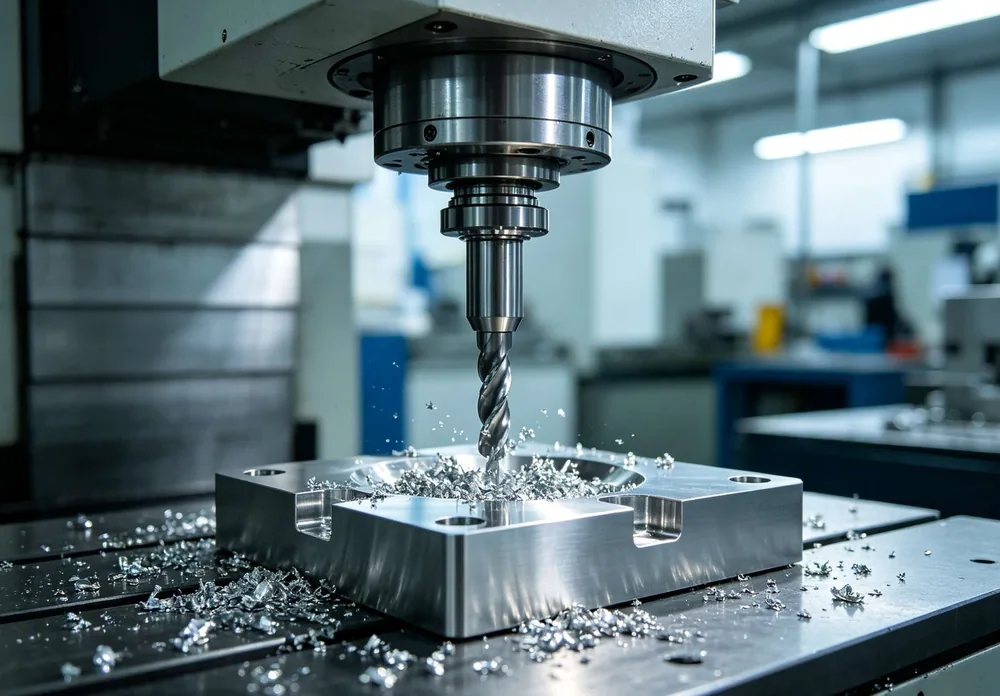
An in-house CNC toolroom with high-speed milling, mirror EDM and slow-wire EDM builds cavities in P20, NAK80 and S136 steel — holding ±0.01 mm on critical dimensions with a polished surface finish.

  • CNC, mirror EDM and slow-wire EDM in-house
  • P20, NAK80 and S136 tool steel options
  • Scientific shrinkage compensation before cutting
Pillar 02 · Rheology

Scientific LSR Injection Processing

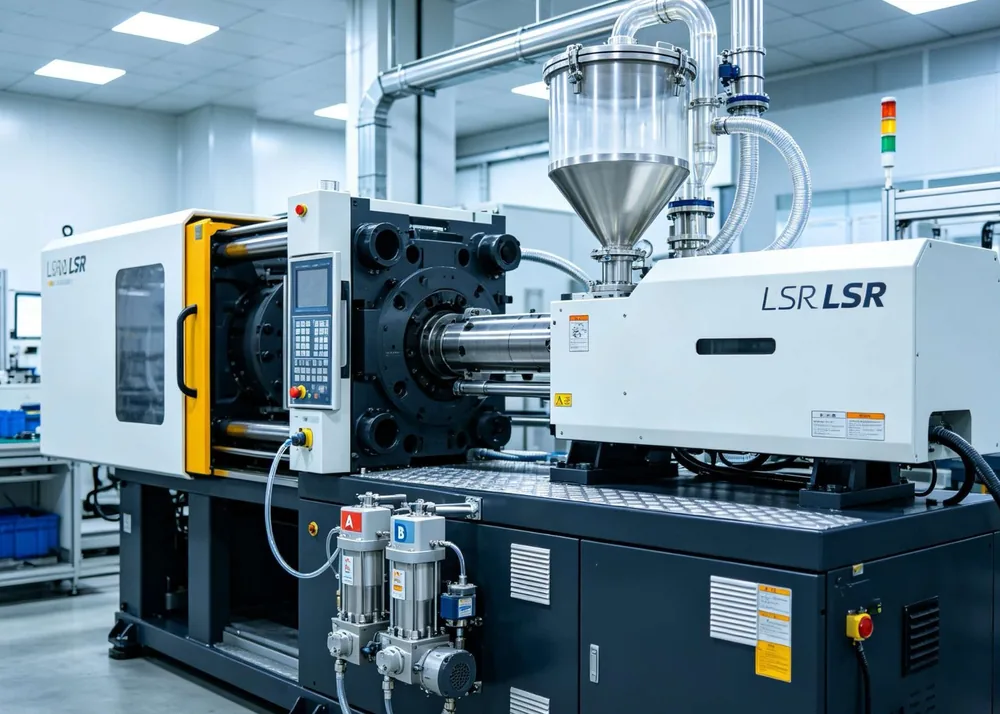
Closed-loop metering feeds high-shear liquid silicone into temperature-isolated cavities, with automated dosing holding injection weight within ±0.1% for repeatable, high-purity parts. Our LSR cell runs YIZUMI, ENGEL, BOY and Techen machines with 1:1 A/B metering.

  • Cold-runner systems prevent premature curing
  • Multi-component dosing with ±0.1% accuracy
  • Vacuum-assisted venting to remove air traps
Pillar 03 · Environment

ISO Class 7 Cleanroom

Our LSR medical molding and packing area is classified ISO Class 7 (ISO 14644-1:2015) and verified by an independent third-party cleanroom testing laboratory — keeping airborne particulate under control for medical-grade and food-contact parts.

  • ISO Class 7 (ISO 14644-1:2015) — certificate CR-2026-0714
  • HEPA-filtered positive-pressure airflow, ≥10 Pa differential
  • Temperature 22 ± 2 °C, RH 40–60%, documented controls
Pillar 04 · Post-Processing

Deflashing & Surface Engineering

Secondary operations deliver a clean, functional surface — from cryogenic deflashing and trimming to printing, laser marking and surface treatments that prepare parts for branding and assembly.

  • Cryogenic (liquid-nitrogen) deflashing for fine flash
  • Automated trimming and manual finishing
  • Pad printing, silk-screen and laser marking
Pillar 05 · Multi-Material

Overmolding & Bonding Engineering

Multi-shot and insert molding combine silicone with engineered thermoplastics — PC, PA66, PBT and more — or metal inserts, planned around substrate, bonding and temperature control during DFM.

  • Overmolding onto PC, PA66, PBT and metal inserts
  • Mechanical interlocks and bonding design
  • Substrate temperature control to avoid stress
Pillar 06 · Metrology

Quality Metrology & SPC

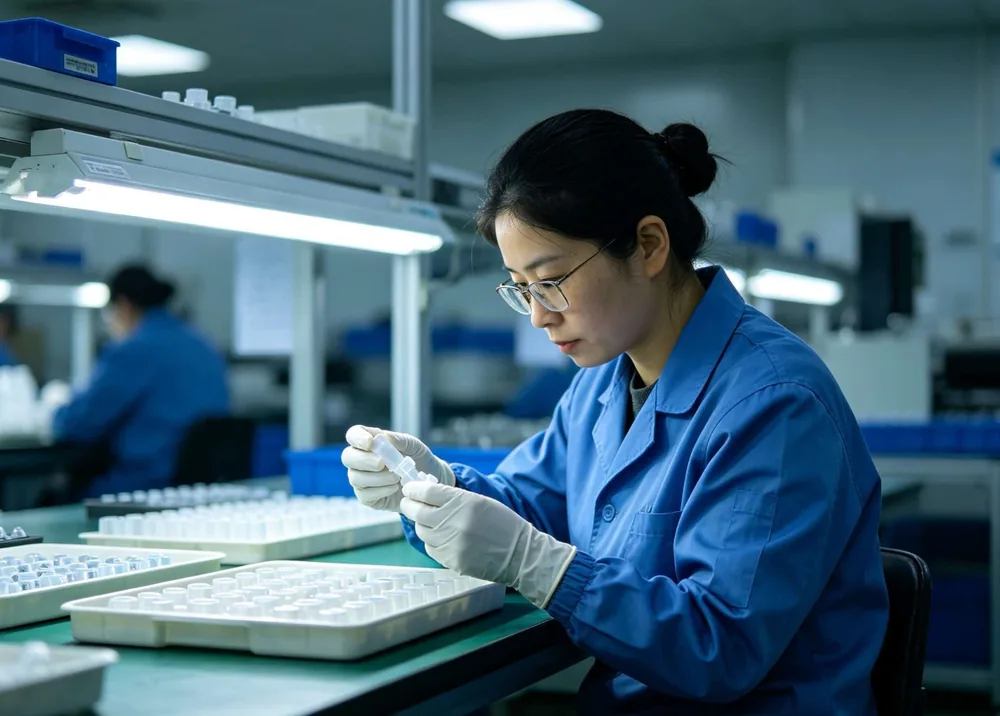
Three-stage inspection with in-house dimensional, hardness and tensile testing, automated optical inspection (AOI) and statistical process control on critical dimensions for consistent, traceable batches.

  • IQC, IPQC and OQC inspection stages
  • Automated optical inspection (AOI) for surface defects
  • In-house hardness, tensile and dimensional testing
  • Full batch traceability to material and machine
Multi-Material Bonding, In Detail

How We Bond Silicone to Plastic & Metal

Overmolding silicone onto a rigid substrate is a bonding-engineering problem, not just a molding problem. We plan four things up front: the substrate material, the bonding mechanism, the interface geometry and the verification test — so the joint holds in your application, not just on the sample.

Substrate & Material Pairing

We overmold silicone onto engineered thermoplastics — polycarbonate (PC), polyamide (PA66) and polybutylene terephthalate (PBT) — and onto metal inserts such as steel, brass and aluminium. The specific material grade is confirmed against the substrate's chemistry and the part's service temperature, because not every silicone bonds equally to every plastic.

Bonding Mechanism

We use two complementary mechanisms. Mechanical interlocking — undercuts, holes, grooves or knurled inserts that physically capture the silicone — provides the most reliable, process-independent bond. Adhesive bonding, where required, uses a primer or a self-bonding LSR grade selected for the specific substrate pair and applied under controlled conditions.

Interface & Process Design

The interface geometry and molding parameters matter as much as the materials. We control substrate pre-heat and surface preparation, gate placement away from the bond line, and clamp pressure to avoid stressing the insert. DFM flags thin sections, sharp corners and insert alignment before tooling is cut.

Verification — Pull, Peel & Thermal Ageing

The bond is proven, not assumed. Depending on the part we perform pull-out or peel testing on the overmolded joint, and — where the application demands it — thermal ageing or temperature-cycling tests to confirm the bond holds after exposure. Test results are documented per program and available on request.

The exact material grades, primer or self-bonding LSR selection, and the applicable pull / peel / ageing test are confirmed per part during DFM — we specify them against your drawing and service conditions rather than citing a generic capability.

Explore the full topic: Silicone Overmolding & Bonding — substrate pairing, bonding mechanisms and verification.

Inside Our Facility

The Equipment Behind the Engineering

Photographs from our Dongguan workshop — the machines, molds and measuring systems that turn our engineering capabilities into finished parts.

CNC machining center milling a precision silicone mold cavity

CNC Mold Machining

High-speed CNC cuts mold cavities to ±0.01 mm before EDM finishing.

LSR injection molding machine with dual-component metering

LSR Injection

Closed-loop metering and cold-runner systems for high-purity liquid silicone parts.

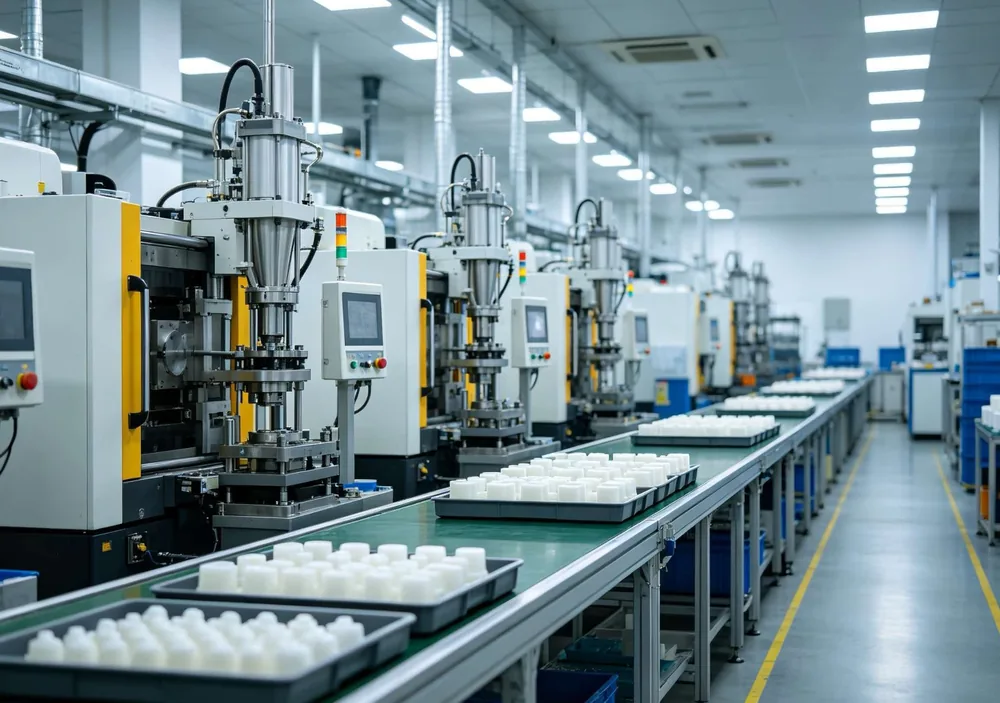
Rows of injection molding machines on the CYES SILICONE production floor

Production Floor

Automated molding lines running compression and LSR injection around the clock.

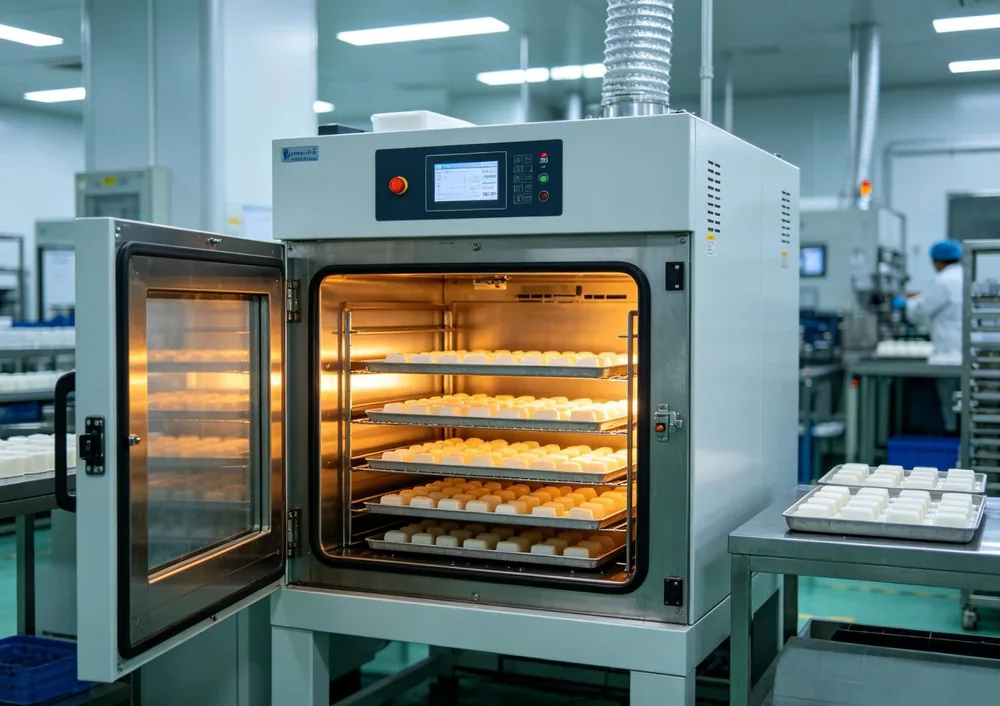
Curing oven for silicone post-curing and volatile reduction

Post-Curing

Controlled ovens reduce volatiles and stabilize mechanical properties.

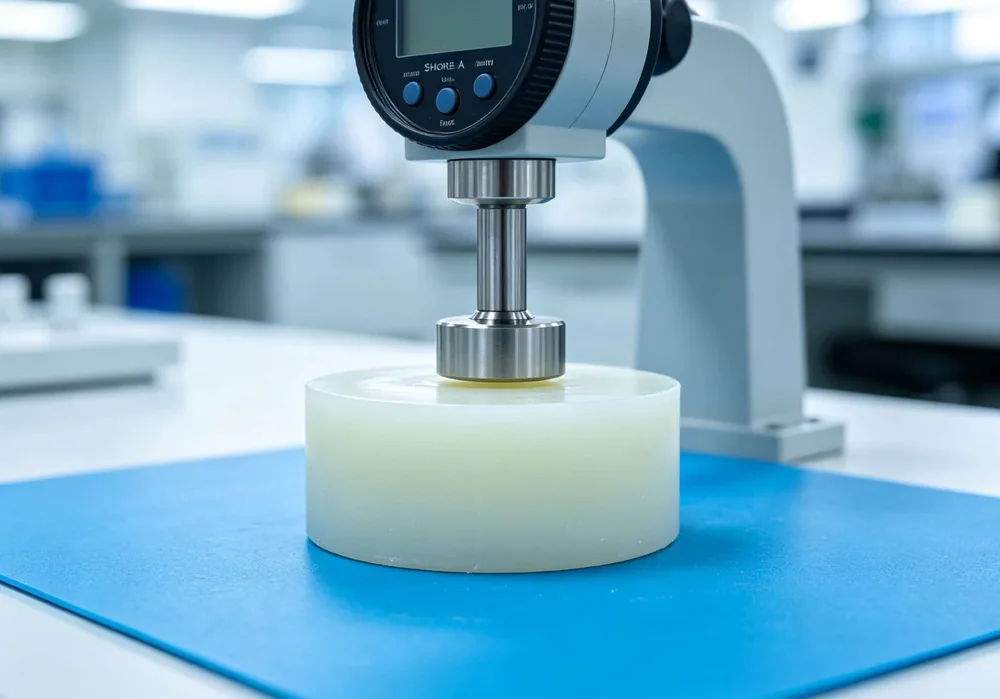
Shore A durometer testing silicone hardness

Metrology

Hardness, tensile and dimensional verification with calibrated instruments.

Operator inspecting and assembling silicone products in the CYES SILICONE workshop

Assembly & Finishing

Inspection, assembly and finishing completed under one roof.

Engineering Specifications

Technical Parameters — With the Context That Matters

Every number below states what it applies to, so you can compare like-for-like rather than against a headline figure.

CapabilityEquipment / TechnologyMeasured parameterApplies to
Mold CNC machiningHigh-speed CNC milling + mirror & slow-wire EDM±0.01 mm cavity tolerance (cold-runner LSR ±0.005 mm)Mold steel cavities (P20 / NAK80 / S136)
LSR injectionYIZUMI / ENGEL / BOY / Techen machines, cold-runner±0.1% shot-weight repeatabilityLiquid silicone injection lines
LSR metering1:1 A/B component metering (part A + catalyst B)Precise 1:1 ratio controlLiquid silicone mixing
CleanroomISO Class 7 (ISO 14644-1:2015), cert. CR-2026-0714≥0.5 μm: 29,800 particles/m³LSR medical molding & packing area
Color matchingPantone / RAL reference formulationΔE ≤ 1.5Solid & liquid silicone compounding
Part dimensionsPrecision tooling + controlled molding±0.1 – 0.3 mm (size-dependent)Finished silicone parts
Hardness rangeIn-house durometer verificationShore 20A – 80ASolid silicone & LSR
Quality controlIQC / IPQC / OQC + AOI + SPCTraceable per batchAll production lots

Silicone is a flexible material, so finished-part tolerance is always wider than the mold cavity tolerance. Our DFM review confirms the tolerance plan before tooling so you never pay for precision you do not need.

LSR Injection Molding Equipment

Our liquid silicone injection cell runs a matched fleet of machines and auxiliaries, each selected for a specific part class.

MachineConfigurationTypical use
YIZUMI UN120LSR120T horizontal, servo, cold-runner compatibleGeneral LSR parts
YIZUMI UN160LSR160T, large LSR parts, auto de-moldingLarger LSR components
ENGEL victory LSR 100High-precision, servo-electricMedical micro components
BOY LSR 55 EMicro-precisionSmall, tight-tolerance parts
Techen JCLS-400-15Vertical, dual slide, 1:1 A/B meteringInsert & overmolding
KT-VS160-2S-3RTVertical double slide, KEBA controllerMulti-material molding

Supporting systems: DME / Mastip cold-runner manifolds · 1:1 precise A/B metering · Yaskawa / Fanuc robotics · 80–220 °C PID post-curing ovens.

How We Report Numbers

No Headline Figures Without Context

Every capability number on this site is stated against the specific thing it measures. Here is the standard we hold ourselves to — and what we invite you to verify.

Stated, Not Inflated

We publish parameters we can support with our own equipment and records. Where a figure depends on your part — like finished-part tolerance — we say so instead of quoting a best-case number.

Apples to Apples

Mold cavity tolerance and finished-part tolerance are different things, and shot-weight repeatability is not colorant dosing accuracy. We label each so you can compare like-for-like.

Verifiable on Request

We do not claim certificates we do not hold. For any number that matters to your product, we can walk you through the underlying measurement record during a DFM review or factory audit.

Verify a Figure With Our Engineers

Value-Added Services

From Molded Part to Retail-Ready

Laser Etching & Marking

Permanent serial numbers, QR codes, logos and alignment marks on silicone surfaces.

Pad & Silk-Screen Printing

Multi-color printing with abrasion-resistant inks, cured for durable branding.

Assembly & Welding

Component assembly and joining to build complete, functional products.

Retail Packaging

Custom packaging, barcode labeling and master carton assembly for global distribution.

Common Questions

Manufacturing Engineering FAQ

Liquid silicone has very low viscosity and can flash into fine gaps. We control it through precise CNC toolmaking, mirror EDM finishing, cold-deck thermal isolation and rigid mold-base construction with consistent clamping pressure.
We machine molds in P20, NAK80 and S136 steel. P20 suits standard runs, NAK80 polishes to a mirror finish for glossy and transparent parts, and S136 stainless steel resists corrosion for medical and food-contact applications.
We run three-stage inspection (IQC, IPQC, OQC) with in-house dimensional, hardness and tensile testing, and apply statistical process control on critical dimensions. Each batch is traceable to its raw material lot and machine parameters.
Yes. We offer insert molding and overmolding, combining silicone with engineered thermoplastics such as PC, PA66 and PBT, or metal inserts. Bonding is planned around substrate, temperature control and interface design during DFM.

Have a Part That Needs Engineering Review?

Send your drawing or specification. Our engineers will review the tooling and process route before quotation.

Start an Engineering Review Read the DFM Guide