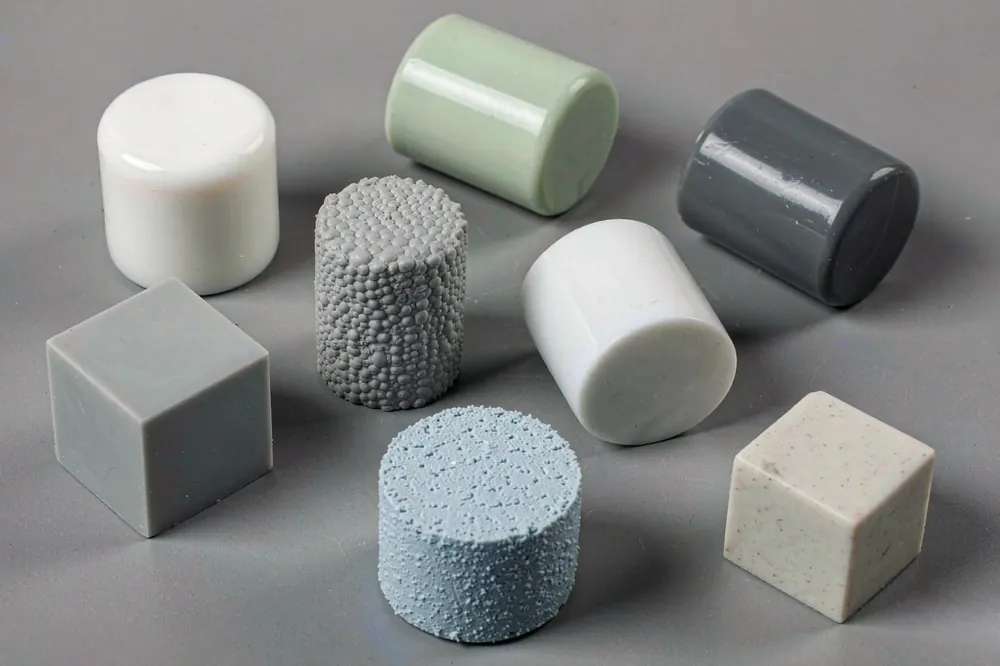
Most silicone product returns and recalls are preventable — and they're almost always caused by the same two things: skipping compliance testing up front, and cutting corners on quality control during production. A food-contact part that fails FDA or LFGB, or a seal that leaks in the field, is not bad luck; it's a process that was allowed to fail. The defense is three layers: compliance testing before you ship, QC gates during production, and traceability so that if something does go wrong, you recall one lot — not everything. This guide lays out each layer so your product never makes it to market with a defect that could bring it back.
The two root causes of almost every return
| Root cause | What it looks like in the field | Where it was preventable |
|---|---|---|
| Compliance failure | Product fails food-contact, safety, or restricted-substance testing | Skipping pre-shipment lab testing |
| Functional defect | Seal leaks, part tears, wrong size or hardness | Weak in-process QC, unclear spec |
Both share a common theme: the cheapest time to catch a problem is before it ships. Every dollar spent on testing up front saves many times that in returns, refunds, chargebacks, and lost reputation.
Layer 1: compliance testing before you ship
For regulated markets, testing is not optional. The key standards for silicone:
- US food contact — FDA 21 CFR 177.2600 (rubber articles for repeated use)
- EU food contact — LFGB (German Food and Feed Code) and EU 1935/2004
- Baby products — often FDA plus additional heavy-metal and phthalate screening
- Medical — ISO 10993 biocompatibility series
- General restricted substances — RoHS, REACH, and Prop 65 as applicable
Rule of thumb: test every production lot for food-contact products, not just the first sample. Raw material can change between lots, and one contaminated lot is all it takes for a recall.
For a full breakdown, see FDA vs LFGB vs RoHS vs REACH.
Layer 2: QC gates during production
A factory without QC gates is a factory guessing. The minimum set:
| Gate | What it checks | Why it prevents returns |
|---|---|---|
| Incoming material inspection | Raw compound, pigment, hardness | Catches bad material before it's molded |
| First-article inspection (FAI) | Dimensions, hardness, appearance vs spec | Confirms tooling is right before mass production |
| In-process inspection | Sampling during the run | Catches drift before it produces a bad lot |
| Final inspection | Full check before packing | Stops defective units from shipping |
Stronger factories add statistical process control (SPC) and process capability (Cpk) studies, which prove the process stays within tolerance — not just that today's sample happened to pass.
Layer 3: traceability, so a problem stays small
Traceability is what turns a potential total recall into a targeted one. It means every unit can be traced to:
- The raw material lot it came from
- The production date and machine
- The QC records and test reports for that batch
Without traceability, if a defect or contamination is found, you have to recall every unit you ever shipped. With traceability, you recall one lot. The difference in cost — and brand damage — is enormous.
Third-party testing: stronger than a factory's word
Factory-issued test reports are useful, but independent lab reports carry more weight with retailers, marketplaces, and regulators. For any regulated market, budget for third-party testing (SGS, TÜV, Intertek, or equivalent) on your first production run.
- Independent reports are harder to challenge in a dispute
- Amazon and other marketplaces increasingly require them
- They protect you if a compliance claim is ever questioned
What a defensible paper trail looks like
If a recall dispute ever happens, these are the documents that protect you. Keep them organized and tied to batch numbers:
- Compliance test reports (FDA, LFGB, RoHS, REACH)
- First-article inspection reports
- Batch certificates of analysis (COA)
- Process capability (Cpk) studies
A factory that can hand you these on request is a factory that takes quality seriously. A factory that can't is a recall waiting to happen.
FAQ
Q: What is the #1 cause of silicone product returns?
A: Compliance failure and functional defects — a part that fails food-contact testing, or a seal/gasket that leaks. Both trace back to skipping testing up front and cutting corners on QC. Design and specification problems (wrong hardness, wrong size) are also common.
Q: How do I prevent a recall on a food-contact silicone product?
A: Test every production lot against the relevant standard (FDA 21 CFR 177.2600 for US, LFGB for EU) before shipment, use only food-grade pigment and compound, and keep full traceability so any bad lot can be isolated.
Q: What is traceability and why does it matter?
A: Traceability means every batch can be traced back to the raw material lot, production date, machine, and QC records. It matters because, if a defect is found, traceability lets you recall one specific lot instead of every unit you ever shipped.
Q: What QC gates should a silicone factory have?
A: At minimum: incoming material inspection, in-process inspection, and final inspection before shipping. Stronger factories add first-article inspection (FAI), statistical process control (SPC/Cpk), and per-lot compliance testing.
Q: How many defective parts per million (PPM) is acceptable?
A: For consumer silicone products, a well-run factory aims for a few hundred to a few thousand PPM. For medical or critical sealing parts, the target is far lower — measured in tens of PPM, backed by Cpk studies.
Q: What documents prove quality if a recall dispute happens?
A: Compliance test reports, first-article inspection reports, batch certificates of analysis (COA), and process capability (Cpk) studies. These are your defense — keep them organized and tied to batch numbers.
Q: Should I get third-party testing before launch?
A: Yes, for any regulated market. Independent lab reports (SGS, TÜV, Intertek, or equivalent) are stronger than factory-issued reports and are often required by retailers and marketplaces.
See our Certifications & Compliance page for the standards we test against, or request a quality and compliance plan for your product before it ships.