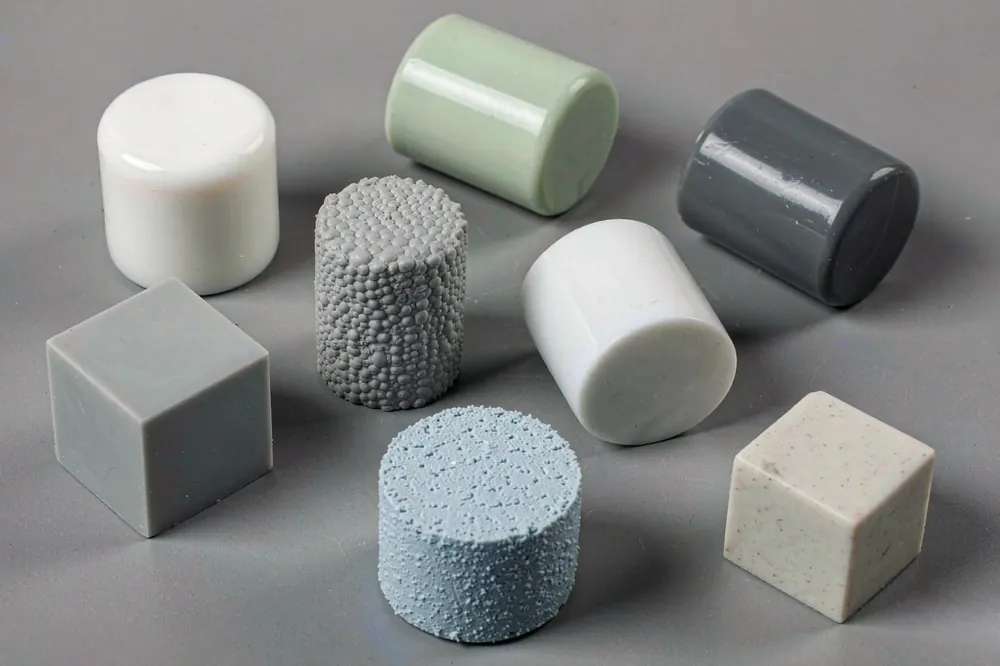
Silicone is colored by adding pigment masterbatch to the raw compound, not by painting or dyeing after molding. That means color is mixed into the material — it cannot chip or peel, but it also cannot be matched as freely as ink on paper. A Pantone reference is a starting point, not a guarantee. Opaque colors can match a Pantone chip to a ΔE under 1.0; translucent and neon colors need physical molded chips at your real wall thickness. This guide explains exactly how the process works, what it costs, and how to specify color so you get a consistent match every batch.
Why Pantone matching in silicone is different from printing
If you've ever matched color in print, packaging, or paint, you know Pantone is a fixed ink formula. Silicone is different for three reasons:
- The color is inside the material. Pigment is dispersed into the compound before molding. The part's surface, gloss, and thickness all change how the color reads.
- There is no universal "silicone Pantone" book. Pantone colors are defined for ink and plastic chips. Silicone factories match against your Pantone number using their own pigment libraries, then confirm with a spectrophotometer.
- Transparency matters. A printed Pantone swatch is opaque. A translucent silicone part at 1 mm wall thickness looks nothing like the same formula at 4 mm.
The practical result: always specify whether you want opaque or translucent, and match at your actual part thickness.
How the color matching process works, step by step
| Step | What happens | Typical time |
|---|---|---|
| 1. Color reference | You provide a Pantone number, a physical sample, or a brand color value (RGB/CMYK/HEX) | Day 0 |
| 2. Pigment selection | The lab picks a base pigment system compatible with the silicone grade (food-grade, medical, etc.) | Day 1–2 |
| 3. Lab trial | A small batch is compounded and molded into a color chip at your target thickness | Day 2–5 |
| 4. Measurement | The chip is read on a spectrophotometer and compared to the target (ΔE) | Day 5 |
| 5. Approval | You approve the chip as the master standard; the recipe is locked | Day 5–7 |
| 6. Production | Each batch is compounded against the locked recipe and checked against the master | Ongoing |
The whole cycle usually takes 5–7 days for a new color. Rushing it is the #1 cause of color rejects — a lab needs time to stabilize the pigment dispersion.
Opaque vs translucent vs neon: the three color families
| Family | Match difficulty | Typical ΔE achievable | Notes |
|---|---|---|---|
| Opaque solid | Easy | ΔE < 1.0 | Most Pantone solids (red, blue, green, yellow) match well. Add titanium dioxide for opacity. |
| Translucent | Moderate | ΔE 1.5–2.5 | Color depends on wall thickness. Match against a molded chip, not a paper swatch. |
| Neon / fluorescent | Hard | ΔE 2.0+ | Needs specialty fluorescent pigment; slightly less colorfast, may fade with UV. |
| Metallic / pearl | Hard | Variable | Uses effect pigments; flow orientation during molding changes the look. |
| Bright white | Moderate | ΔE < 1.5 | Needs high-load titanium dioxide; very sensitive to contamination. |
What is ΔE and why it's the only number that matters
ΔE (Delta E) is the numeric distance between two colors in the CIELAB color space. It's the objective way to answer "is this color close enough?"
- ΔE < 0.5 — Indistinguishable to most people, even side by side
- ΔE 0.5–1.0 — Only a trained eye can tell
- ΔE 1.0–1.5 — Noticeable side by side, acceptable for most consumer products
- ΔE 1.5–2.0 — Clearly visible difference, borderline for brand colors
- ΔE > 2.0 — Obvious mismatch, usually a reject
For a branded product, specify ΔE ≤ 1.0. For generic consumer goods, ΔE ≤ 1.5 is a reasonable, cost-effective target. Write this number into your spec sheet — a vague "match Pantone 186C" gives the factory no measurable target.
How much does custom color matching cost?
Most silicone factories charge a one-time color-matching fee per color, in roughly these ranges:
| Scenario | Typical cost |
|---|---|
| Standard pre-mixed color (Pantone 186C red, 347C green, etc.) | Free (in-stock masterbatch) |
| Custom opaque color match | $100–$200 per color |
| Custom translucent / specialty match | $150–$300 per color |
| Neon, metallic, or pearl effect match | $200–$500 per color |
Most factories waive or reduce the color fee once you commit to a molding order. Ask up front whether the matching fee is credited back against the production order.
Color and compliance: food-grade and medical restrictions
Not every pigment is allowed in every application. Food-contact and medical silicone must use pigments that pass the relevant standards:
- Food-grade (FDA / LFGB) — Pigment must meet migration limits and heavy-metal restrictions. Some vivid reds and yellows use pigments that are restricted in the EU.
- Medical (ISO 10993) — Pigment must be biocompatible; implantable grades use a very narrow pigment set.
- Baby products — Many buyers insist on FDA-grade pigment even for non-food baby items.
Rule of thumb: if your product is food-contact, tell the factory up front. It changes the pigment library they can use, which may widen the ΔE tolerance on very specific colors.
How to prevent batch-to-batch color drift
Color drift happens when the factory reformulates slightly between batches — a different pigment lot, a slightly different ratio, or a different supplier. Prevent it by locking these four things:
- Locked masterbatch recipe — pigment type, ratio, and supplier written into the production spec.
- Approved master chip — a physical color standard both you and the factory keep.
- Spectrophotometer check per batch — every lot measured against the same ΔE target, logged in the Certificate of Analysis (COA).
- Same silicone grade — switching base compound (even between "equivalent" grades) shifts the color.
A factory that logs per-batch color readings is a factory that takes color seriously. If your supplier can't produce a COA with a ΔE value, expect drift.
Common color mistakes buyers make
- Specifying only a Pantone number, no ΔE target — gives the factory no measurable goal.
- Matching a translucent part to an opaque paper swatch — guaranteed mismatch.
- Approving color from a phone photo — screen color is meaningless; ask for a physical chip.
- Not locking the recipe — the first batch matches, the third batch drifts.
- Ignoring food-grade pigment restrictions — the color matches but fails compliance.
FAQ
Q: Can silicone match any Pantone color exactly?
A: Almost, but not perfectly. Opaque silicone can hit a ΔE under 1.0 against a Pantone chip for most solid colors. Translucent and very bright neon colors have wider tolerance because the final color depends on part thickness, not just pigment.
Q: How much does custom color matching cost?
A: Most factories charge a one-time color-matching fee of roughly $100–$300 per color, or roll it into the mold/molding quote. Pre-mixed standard colors are usually free.
Q: What is an acceptable ΔE for silicone color?
A: For consumer products, ΔE under 1.5 is generally considered a visual match. For brand-critical colors, specify ΔE under 1.0. Above ΔE 2.0, most buyers can see the difference side by side.
Q: Why is my translucent silicone color different from the Pantone chip?
A: Because translucent color depends on part wall thickness. A 1 mm wall looks lighter than a 4 mm wall with the same pigment load. Match translucent colors against a physical molded chip at your actual part thickness, not a printed Pantone swatch.
Q: Does color affect silicone hardness?
A: Slightly. Pigmenting typically lowers hardness by 2–5 Shore A. If you need a specific hardness in a specific color, ask your factory to compensate in the compound formulation.
Q: How do I prevent color drift between batches?
A: Have your factory lock the masterbatch recipe, keep an approved master sample, and measure every batch with a spectrophotometer against the same ΔE target. Log readings in the COA for each lot.
Q: Which colors are hardest to match in silicone?
A: Fluorescent/neon, very bright white, metallic, and pearl colors are the hardest. Neon and metallic effects need specialty pigments; bright white needs titanium dioxide and is sensitive to contamination.
See our Specialty Molding Materials page for pigment and grade options, or request a color match with a physical chip for your project.